Why Your Nervous System Might Be Holding You Back From Long-term Healing
Why Your Nervous System Might Be Holding You Back From Long-term Healing
by Erin Collins, PT, MSPT, Astym Cert.
Posted on 17/03/2025 13:24
You’re stretching, strengthening, foam rolling, and doing all the things you’ve been told will help—so why does your pain keep coming back? Why does your body still feel stiff, tight, or on edge, no matter what you do?
The answer might not be in your muscles or joints but in your nervous system. If your body is stuck in fight-or-flight mode, it’s prioritizing survival—not healing. When your nervous system is dysregulated, pain signals become amplified, muscles stay tense, and recovery slows down.
The good news? You’re not broken, and this can change. Let’s dive into why your nervous system plays such a huge role in healing and how to work with it instead of against it.
How Fight-or-Flight Affects Pain & Recovery
Your nervous system has two main modes:
Sympathetic (Fight-or-Flight): Your body’s stress response. Muscles stay tense, pain sensitivity increases, and healing takes a backseat.
Parasympathetic (Rest-and-Digest): Your recovery mode. Blood flow improves, muscles relax, and your body can repair itself.
When you experience chronic stress, old injuries, poor sleep, or even daily frustrations, your body may get stuck in fight-or-flight mode without you even realizing it. And when this happens, pain and tension can linger long after the original injury has healed.
Signs this might be happening to you:
✔️ You always feel tight, no matter how much you stretch.
✔️ Pain flares up randomly, even when you’re doing “all the right things.”
✔️ Your muscles feel stiff or guarded, especially in the neck, shoulders, or low back.
✔️ You have trouble sleeping or relaxing fully.
✔️ You feel easily overwhelmed or overstimulated by noise, touch, or movement.
Your nervous system isn’t working against you—it’s just trying to protect you. But if it’s stuck in a stress cycle, it can keep you feeling stuck in pain.
How to Reset Your Nervous System for Better Healing
The key to unlocking movement and reducing pain isn’t just about muscles—it’s about teaching your nervous system that it’s safe to move again. Here’s how:
Breathe First, Move Second 🫁
Most people breathe shallowly without realizing it, reinforcing tension in the body. Slow, controlled breathing (especially long exhales) tells your nervous system that it’s safe to relax. Try:
Diaphragmatic breathing: Breathe deeply into your belly for 4 seconds, hold for 4 seconds, exhale for 8 seconds.
Shift from Stretching to Stability 💪
Instead of forcing aggressive stretches, focus on gentle stability work. Exercises like core activation, glute engagement, and slow controlled movement signal to your nervous system that you’re in control.
Incorporate Manual Therapy or Dry Needling 🙌
Hands-on techniques like manual therapy, dry needling, or gentle myofascial release can help reset overactive patterns and allow the body to let go of tension.
Move in Ways That Feel Safe & Natural 🚶♀️
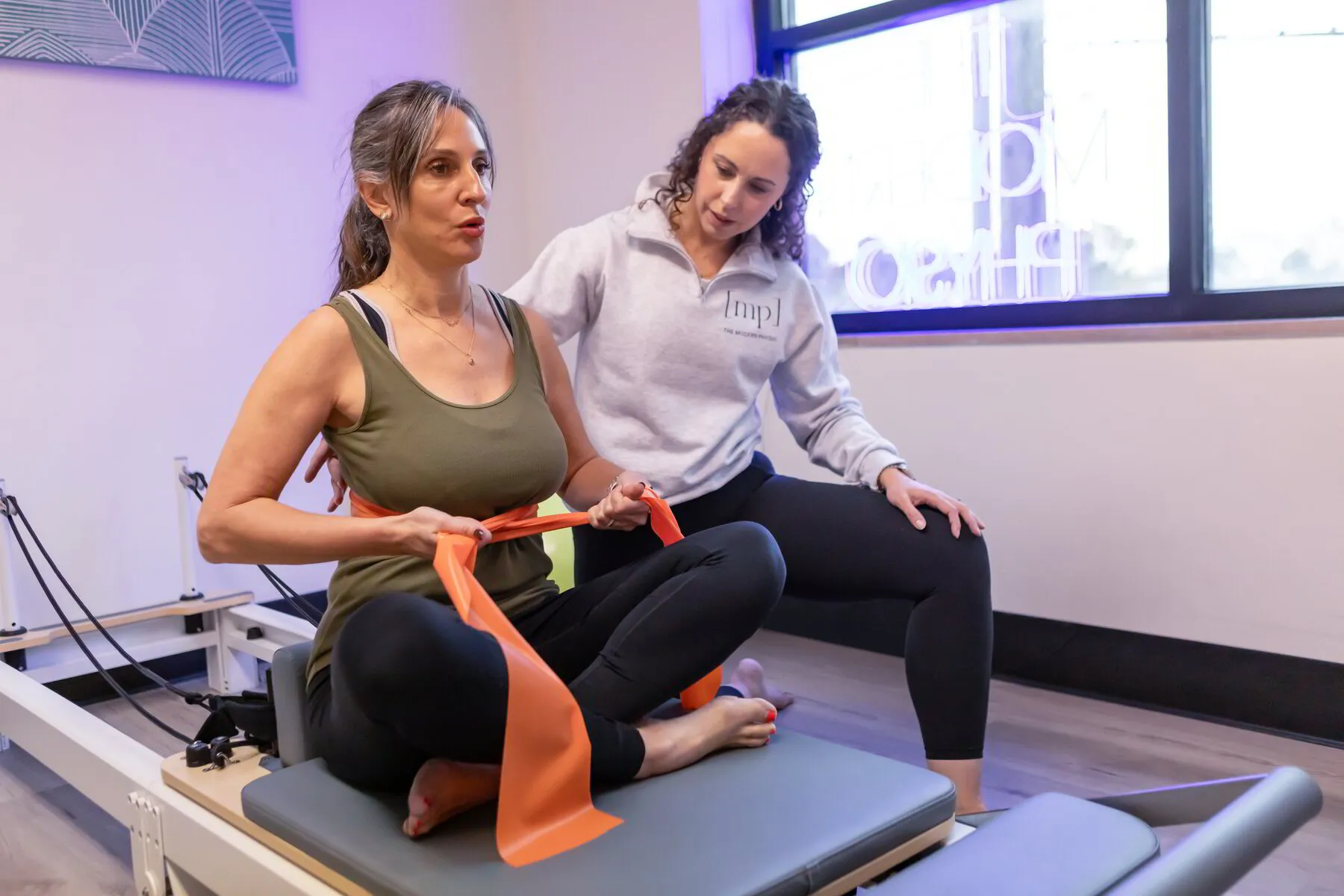
If your body is on high alert, forcing high-intensity exercise can make things worse. Instead, try low-impact, controlled movement like Pilates-based rehab, walking, or mobility exercises.
When to Seek Physical Therapy
If you’ve been stretching and strengthening for weeks or months without improvement, it’s time to take a different approach. As a manual physical therapist in Grandview, I work with women to identify hidden compensations, nervous system dysregulation, and movement patterns that may be keeping them stuck.
By combining hands-on techniques, nervous system regulation, lifestyle approaches, and Pilates-based rehab, we create a treatment plan that helps your body feel safe to move again—without pain.
Your body isn’t failing you. If pain, tightness, or movement restrictions keep coming back, it’s not just about muscles—it’s about how your nervous system is interpreting pain and movement.
By shifting from force to function, stress to stability, and tension to trust, you can retrain your body to move with ease again. Ready to take the next step? Let’s work together to get you moving and feeling better—long-term.